




Why Was My Social Security Disability Claim Denied?
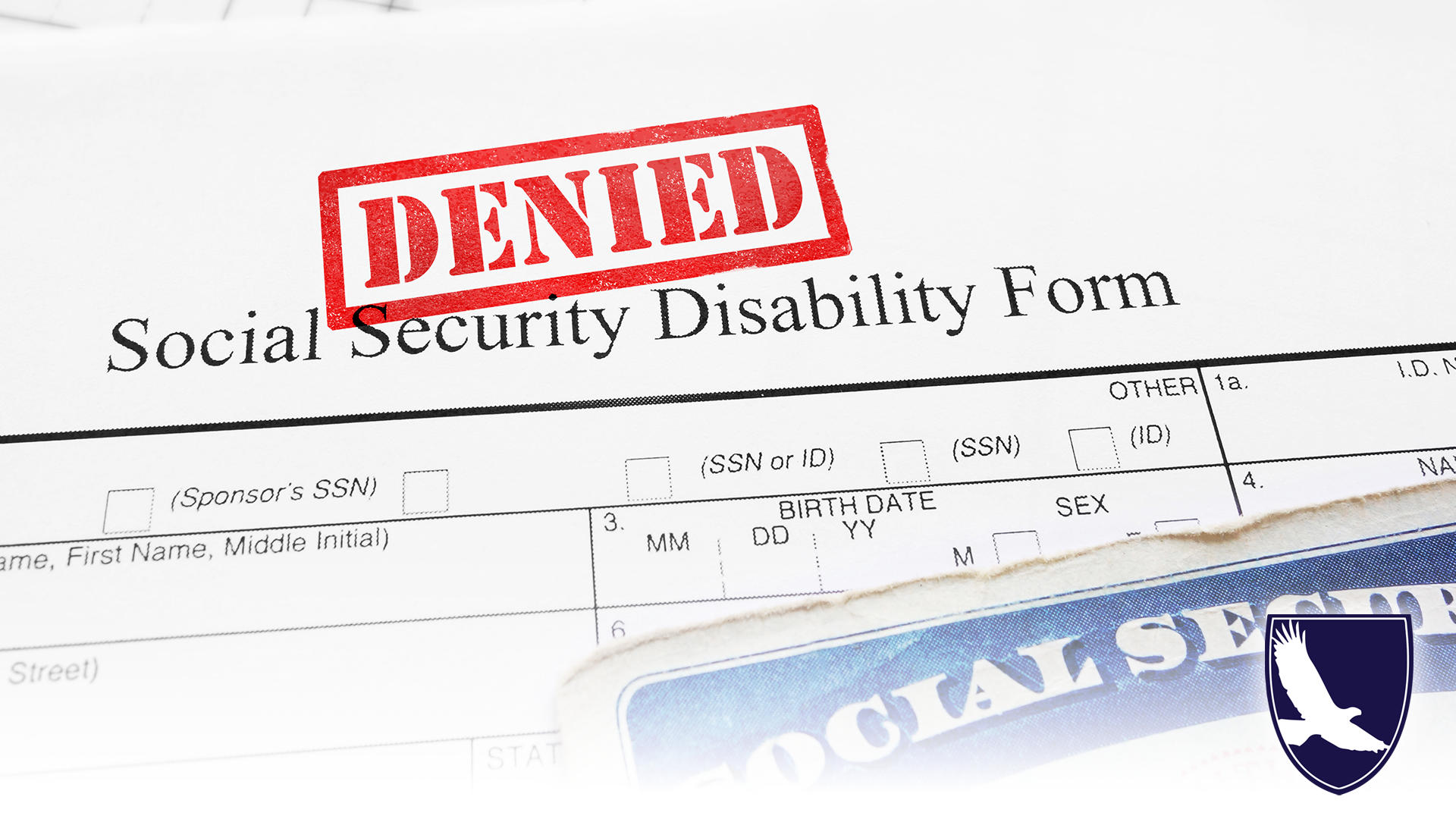
Disability Denials

Social Security disability claims are denied for either technical or medical reasons. A technical denial means you didn’t meet a non-medical eligibility rule. A medical denial means Social Security decided your condition didn’t meet its disability standard. Most initial claims are denied, but you can challenge a denial through an appeal.
How Often Are Disability Claims Denied?
Disability denials are far more common than approvals at the start of the process. According to a 2024 Social Security Administration Report, only 33.8% of claims filed in 2021 were allowed among those that received a medical decision. About 66% were medically denied. At reconsideration, 13.8% were allowed, and roughly 86% were denied.
Source: Social Security Administration, Annual Statistical Report on the Social Security Disability Insurance Program, 2024. Rates reflect claims filed in 2021 that received a medical decision and do not predict the outcome of any individual claim.
The numbers can feel discouraging, but they also put your letter into context. An initial denial is the usual outcome, not proof that your condition is minor or your case has no merit. Understanding why Social Security denied your claim can help you determine what to do next while you still have time to appeal.
How to Read Your Disability Denial Letter
Start with the first page of the notice. It should state the decision, the letter date, and how to appeal. Then look for the personalized disability explanation, which may appear later in the notice or in a separate form. That explanation identifies the medical or vocational conclusion behind the denial, such as a finding that you can return to prior work.
As you review the letter, find and save these details:
- The denial reason: Determine whether Social Security made a technical or medical decision
- The appeal instructions: Confirm which appeal form or process applies to your claim
- The notice date: Use it to calculate your deadline
- The disability explanation: Compare Social Security’s description of your conditions, treatment, and work ability with your actual records
You generally have 60 days from the date you receive the notice to appeal. Social Security assumes you received it five days after the date printed on the letter, effectively creating 65 days from that date in most cases. Don’t wait until the last few days. Filing the appeal preserves your rights even if you are still gathering evidence. If you have a disability representative, they can also help you keep track of these deadlines and make sure your appeal is filed on time. At Quikaid, we closely monitor appeal deadlines for our clients. If a deadline is missed because of circumstances such as a denial notice not being received, we can also help determine whether there is good cause to ask Social Security to accept a late appeal.
Your appeal deadline
How the 60-day appeal clock works
Count forward from the date printed on your denial notice. In most cases this gives you 65 days from that date to file.
Missed the deadline? You can ask Social Security to accept a late appeal by showing good cause, such as serious illness, a death in the family, or never receiving the notice. Good cause is granted at the agency’s discretion and is not guaranteed — filing on time is always the safer path.
Technical Denials vs. Medical Denials
The type of denial tells you whether Social Security reviewed your medical evidence and often determines whether an appeal or a new application makes more sense.
| Type of denial | What Social Security decided | Common examples | Usual next step |
|---|---|---|---|
| Technical denial | You didn’t meet a non-medical eligibility rule, sometimes before any medical review occurred. | Earning above the SGA limit, insufficient SSDI work credits, or SSI income and resources above program limits | Check the figures and facts. Appeal an error, or consider reapplying if your circumstances change. |
| Medical denial | You met the basic non-medical rules, but Social Security found that your condition didn’t satisfy its disability standard. | The condition will not last 12 months, is insufficiently severe or supported by evidence, or you can perform past work or adjust to other work. | Appeal promptly and address the medical or vocational weakness identified in the notice. |
This distinction gives you a starting point for deciding what to do next. If your letter points to a non-medical rule, begin by checking the specific eligibility requirement Social Security says you didn’t meet.
Technical Reasons a Disability Claim Is Denied
Technical denials don’t answer whether you are medically disabled. They focus on eligibility rules for Social Security Disability Insurance (SSDI) or Supplemental Security Income (SSI). Because the two programs use different non-medical standards, someone who receives a technical SSDI denial may still qualify for SSI, or the reverse.
You Were Working Above the SGA Limit
Social Security generally won’t approve a new disability claim if you are performing substantial gainful activity (SGA). In 2026, the monthly earnings guideline is $1,690 for most applicants and $2,830 for applicants who are blind. Social Security adjusts these figures annually. You can review the current amounts in the 2026 Social Security Disability Benefits Pay Chart and the SSA 2026 Fact Sheet.
Earnings above the applicable amount in a month generally indicate SGA and can prevent eligibility for that period, no matter how serious your diagnosis is. Still, gross pay is not always the final answer. Social Security may consider impairment-related work expenses, employer subsidies, unsuccessful work attempts, and special rules for self-employment. If the agency relied on the wrong earnings or overlooked one of these circumstances, the technical denial may be worth appealing.
You Don’t Have Enough Work Credits for SSDI
SSDI is an insurance program. You earn work credits by paying Social Security taxes, and the number required depends on your age when your disability began. Many adults age 31 or older generally need at least 20 credits earned during the 10 years ending when disability started. Younger workers may qualify with fewer credits under special rules.
Your denial may refer to your date last insured, or DLI. This is the last date you met SSDI’s work-credit requirements. If you stopped working years ago, your insured status may have expired before Social Security believes your disability began. You would then need evidence showing that you became disabled on or before the DLI.
A work-credit denial doesn’t automatically rule out SSI. SSI doesn’t require a work history, although it does apply strict financial limits.
Your Income or Resources Are Too High for SSI
SSI is needs-based. In 2026, the maximum federal payment is $994 per month for an eligible individual and $1,491 for an eligible couple, although countable income can reduce the actual benefit. The resource limits remain $2,000 for an individual and $3,000 for a couple.
Not everything you own counts toward those limits. Your primary home and, in most situations, one vehicle are excluded. Other exclusions may apply depending on the asset and how you use it.
Social Security may also deem part of another person’s income or resources to be yours. Deeming most often applies between spouses who live together or from a parent to a child under 18. If Social Security used outdated account balances, counted an excluded asset, or attributed the wrong household income, review the calculation closely before accepting the denial.
Medical Reasons a Disability Claim Is Denied
Medical denials can happen at several points in Social Security’s five-step evaluation. Some are based on how long your limitations are expected to last or how significantly they affect your ability to work. Others focus on what work the agency believes you can still perform. The letter may use formal language, but the central question is usually straightforward: what does the evidence show you can and cannot do on a reliable, full-time basis?
Your Condition Isn’t Expected to Last 12 Months
Social Security requires a medically determinable condition that has lasted or is expected to last at least 12 continuous months, or is expected to result in death. You don’t have to wait a full year before filing. The agency can approve a claim based on the expected duration.
Problems arise when someone applies soon after an injury, surgery, or new diagnosis and the medical records don’t yet show a long-term prognosis. Social Security may conclude that treatment should restore the ability to work within 12 months. An appeal can add later records that document complications, a slower recovery, or lasting limitations.
Your Condition Isn’t Considered Severe Enough
At Step 2, Social Security asks whether your condition significantly limits basic work activities. A diagnosis by itself doesn’t answer that question. Even the most common disabilities affect people differently. Two people can have the same condition and very different abilities to stand, concentrate, use their hands, keep a schedule, or interact with others.
Social Security may also compare your condition with its SSDI medical listings, which describe impairments the agency considers severe enough to prevent substantial work when specific criteria are met. However, not matching a listing doesn’t automatically disqualify you. The agency must still consider how your symptoms and limitations affect your ability to work.
This is why a denial may say your impairment is “not severe” even when you have ongoing symptoms. Social Security is evaluating the functional effect of your condition under its rules, not necessarily disputing that your diagnosis or symptoms are real.
Social Security Says You Can Still Work
The most common initial medical denials occur at Steps 4 and 5, when Social Security concludes that you can return to past work or adjust to another type of work. The agency first develops your residual functional capacity, or RFC, which describes the most you can still do despite your limitations. It then compares that capacity with your work history and other vocational factors.
The agency may deny the claim because it believes:
- You can perform your past relevant work as you did or as employers generally require
- You cannot return to past work, but you can adjust to other work that exists in significant numbers in the national economy
Social Security doesn’t have to show that a local employer would hire you or that a specific opening is available. A strong appeal therefore needs more than a diagnosis. It should show why your physical or mental limitations prevent you from sustaining the duties, pace, attendance, or demands of the work Social Security identified.
There Wasn’t Enough Medical Evidence
Your claim can be denied even when your condition is disabling if the file doesn’t prove it. Thin treatment records, long unexplained gaps in care, and missing providers are among the most preventable problems.
Disability Determination Services develops the medical portion of the claim and requests records from the providers identified in your application. It cannot request records from a provider it doesn’t know about. Even listed records may arrive incomplete or not arrive before a decision.
Before appealing, compare the evidence list in your notice with your full treatment history. Check that Social Security had records from every relevant provider, including recent test results and specialist visits. Then look beyond volume. The most useful evidence connects symptoms to specific work-related restrictions and explains how often those problems occur.
Other Common Reasons for Denial
Some claims fall apart because Social Security can’t finish developing the file. These denials may be preventable, but they still require a quick response.
Common problems include:
- Missing a consultative examination scheduled by Social Security
- Failing to return work-history, function, or daily-activity forms by the deadline
- Changing your address or phone number without updating the agency
- Not responding when an examiner tries to clarify information
- Failing to follow treatment that Social Security believes would restore your ability to work
The last issue has important limits. Under Social Security Ruling 18-3p, the agency must consider whether you had good cause for not following prescribed medical treatment. Acceptable reasons can include inability to afford care and intolerable side effects, among other circumstances. Explain the reason and support it when possible, rather than leaving a treatment gap unexplained.
Should You Appeal a Technical Denial?
An accurate technical denial is often not worth appealing because medical evidence can’t fix a non-medical eligibility problem. If your earnings truly exceed the applicable SGA limit or your resources exceed SSI’s limits, the agency may have applied the rule correctly.
Consider appealing your technical denial when the decision rests on a factual or calculation error, including:
- Work credits or covered earnings are missing from your record
- Social Security used the wrong earnings period or amount
- The agency counted an excluded resource or miscalculated deemed income
- You submitted documentation that wasn’t considered
- Social Security used an incorrect alleged onset date, causing your date last insured to fall before the disability period
When the denial was accurate, but your circumstances have since changed, a new application may be the better route. For example, you may have stopped SGA-level work or spent down countable resources. The best choice depends on whether you are correcting the old decision or presenting a genuinely new period of eligibility.
What to Do After a Medical Denial
In most medical cases, appeal instead of starting over. Social Security’s administrative review process moves through four levels:
- Reconsideration: A different examiner and medical team review the claim, including any new evidence
- Hearing before an administrative law judge: You can testify, explain your limitations, and respond to questions about your records and work history
- Appeals Council review: The council may deny review, issue a decision, or return the case to an administrative law judge
- Federal court review: You may file a civil action after exhausting the administrative appeal levels
Approval rates rise substantially at the hearing stage. Social Security’s Annual Statistical 2024 Report shows that disabled-worker claims filed in 2021 had a 13.8% medical allowance rate at reconsideration, compared with 57.5% at the hearing level or above. The data clearly shows that mature claims receive a much higher medical allowance rate at the hearing level or above than at reconsideration. This comparison doesn’t guarantee anything for any individual case, but it shows why an early denial shouldn’t automatically end a potentially valid claim.
Your immediate priority is to submit the appeal within the 60-day window. You can submit evidence and detailed arguments later, within the applicable deadlines.
Why You Shouldn’t Just Start a New Application
A new application returns you to the beginning of a process that can already take up to 31 months. It may also cost you the protective filing date tied to the first claim, which can reduce potential back pay or affect the period Social Security considers.
Starting over doesn’t solve an evidence problem either. If the new application contains the same records and the same description of your limitations, it may produce the same result. An appeal preserves the earlier claim while giving you a chance to correct omissions and challenge the reasoning behind the denial.
How a Disability Representative Improves Your Odds
A representative can’t promise approval, but they can turn a broad disagreement with the denial into a focused appeal. Instead of sending more records, the representative identifies the missing link between the evidence and Social Security’s rules.
At the appeal stage, a representative may:
- Identify the exact technical, medical, or vocational basis for the denial
- Obtain missing treatment records and follow up when providers don’t respond
- Ask treating providers for RFC forms or statements that describe specific limitations
- Review your work history for errors or incomplete job descriptions
- Prepare you to testify clearly about symptoms, daily activities, treatment, and past work
- Develop questions or arguments that address the evidence presented at the hearing
For many people, the next concern is whether they can afford that help. Disability representatives commonly use a contingency fee structure, so clients generally don’t pay a representative fee up front and don’t have to pay unless the claim is approved. Social Security regulates representative fees and generally pays an approved fee from past-due benefits when applicable.
Get a Free Review of Your Denial
A denial letter can be disheartening, especially when paired with a ticking clock in the form of your appeal deadline, but you don’t have to decide the next step alone. Quikaid can review the reason for your denial, explain whether an appeal makes sense, and help identify what the original claim may have been missing.
You can hire Quikaid for help with your disability claim, complete a free case evaluation, or call the New Client Department at (800) 941-1321. You may need time to process the decision and consider what to do next. Still, because the appeal deadline begins when you receive the notice, try to reach out for guidance as soon as you feel able.
Denied for SSDI or SSI?
Quikaid is America's Disability Experts®. We handle your entire appeal — and you pay nothing unless you win.
Get a Free Case Evaluation Sign Our Contract OnlineFrequently Asked Questions About Disability Denials
The same questions tend to surface after a denial, especially when the letter doesn’t make the next step clear. These answers cover the deadlines and decisions that matter most now.
How Long Do I Have to Appeal a Disability Denial?
You have 60 days from the date you receive your denial letter to file an appeal. Social Security assumes you received the letter five days after the date printed on it, which effectively gives you 65 days from that date. Missing the deadline generally means starting a new application and losing your original filing date, so filing promptly matters more than filing perfectly.
What Percentage of Disability Claims Are Denied the First Time?
Most initial disability applications are denied — roughly two out of three, according to Social Security’s own published statistics. Reconsideration, the first level of appeal, also denies most claims. Approval rates improve substantially at the hearing level before an administrative law judge, which is why appealing rather than reapplying is usually the stronger strategy after a medical denial.
Does Being Denied Mean I’m Not Disabled?
No. A denial means Social Security did not find sufficient evidence to approve your claim under its specific rules — not that your condition isn’t real or limiting. Many denials stem from thin medical records, missing provider information, or a diagnosis documented without the functional limitations it causes. Claimants who are genuinely unable to work are routinely denied initially and approved later on appeal.
What’s the Difference Between a Technical and a Medical Denial?
A technical denial rejects your claim on non-medical grounds after Social Security evaluates non-medical facts — typically because you were working above the substantial gainful activity limit, lacked sufficient work credits for SSDI, or exceeded SSI’s income and resource limits. A medical denial means you cleared those requirements, but Social Security determined your condition isn’t severe enough or won’t last long enough to qualify.
Can I Work While Appealing a Disability Denial?
You can work, but earnings above the substantial gainful activity limit — $1,690 per month in 2026 for non-blind individuals — will generally prevent approval for any month you exceed it. Limited part-time work below that threshold is permitted, though Social Security may examine it as evidence of your capacity. Discuss any work activity with your representative before starting.
Should I Appeal or File a New Application?
Appeal in nearly every case involving a medical denial. Filing a new application restarts the entire process, forfeits your original protective filing date, and can significantly reduce back pay — often while producing the same outcome on the same evidence. A new application may make sense after an accurate technical denial when your circumstances have genuinely changed, such as when you were denied for working above SGA but have since stopped working or reduced your earnings below SGA.
Should I Get a Representative After My Disability Claim Is Denied?
The appeal stage is where representation matters most. A representative identifies exactly why your claim was denied, gathers the evidence that was missing, obtains functional capacity statements from your treating providers, and prepares you to testify at a hearing. Representatives work on contingency and are paid only if your claim is approved, so there is no upfront cost.
What Happens if I Miss My Appeal Deadline?
You can request that Social Security accept a late appeal by showing good cause — serious illness, a death in the family, a records problem, or not receiving the notice. Social Security grants good cause at its discretion, and it is not guaranteed. If your request is refused, your only remaining option is a new application, which restarts the process entirely.
Share via: